
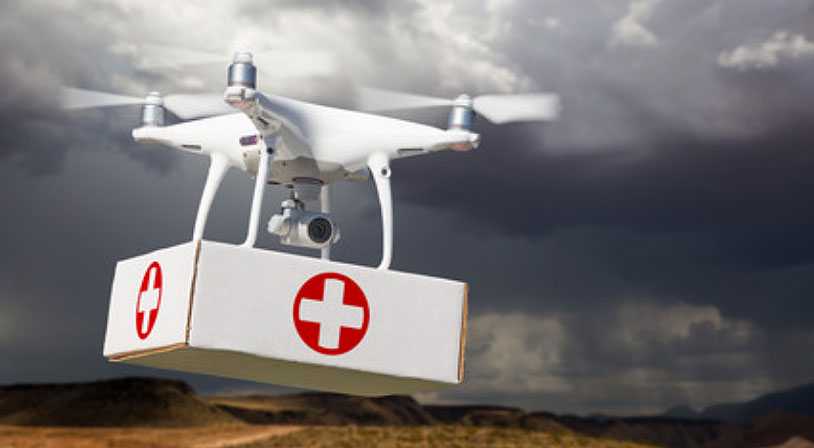
Researchers from Baltimore-based Johns Hopkins University have determined that large bags of blood products can maintain temperature and cellular integrity during transportation by drones.

A report on the study findings, published in the journal Transfusion in November, supports earlier evidence that remotely piloted drones offer an effective, safe and timely mode to transport blood products to remove accident or natural catastrophe sites.

“For rural areas that lack access to nearby clinics, or that may lack the infrastructure for collecting blood products or transporting them on their own, drones can provide that access,” says Timothy Amukele, MD, PhD, assistant professor of pathology at the Johns Hopkins University School of Medicine and the paper’s lead author.

New antibiotic packs a punch against bacterial resistance

Scientists at The Scripps Research Institute…

Covid-19 in Europe and New Information on Vaccines

Eric Rubin is the Editor-in-Chief of the …

Cloth skullcaps mitigate OR contamination more effectively than disposable headgear

A study published online by the Journal of the…

YOUTUBE LIVE “SIMPOSIO INTERNACIONAL” – STIMULAN / 10 NOV – México 17:00 (CMT)

YouTube LIVE SIMPOSIO INTERNACIONAL Martes 10 de…

WHO’s ‘priority pathogens’ list highlights urgent need for new drugs

The World Health Organization has released its…

Nuevo objetivo “universal” para el tratamiento antiviral

Con nuevos virus que representan una amenaza…

La controversial cirugía de estatura 

¿Alargamiento óseo? Así como lo lees, una de las…

Life expectancy to break 90 barrier by 2030

A study by Imperial College London and the World…