
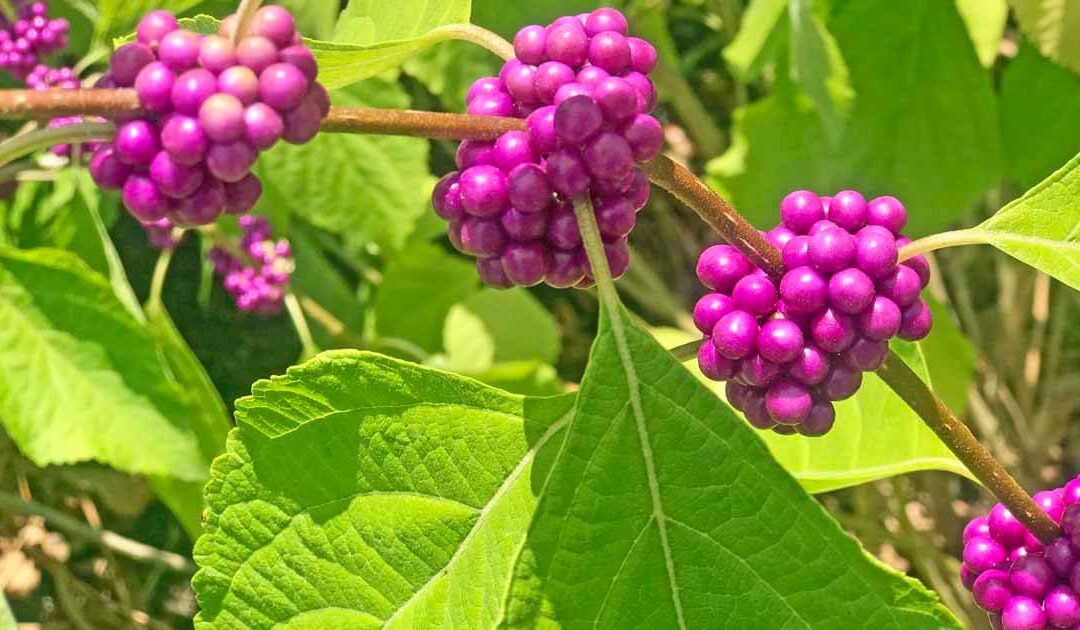

According to an article recently shared by ScienceDaily, researchers have discovered a compound in the leaves of a common shrub that boosts antibiotic activity against antibiotic-resistant staph bacteria. In the past, Native American tribes relied on the American beautyberry shrub for various medicinal purposes like treating malarial fevers, rheumatism, dizziness, stomach aches, urine retention and itchy skin.
Scientists from Emory University and the University of Notre Dame investigated the chemical properties of the American beautyberry, showing that the plant compound in combination with oxacillin worked to knock down the resistance to the drug of MRSA.
Researchers stated that the next step is to test the combination in animal models, and if those results prove effective against MRSA infections, “the researchers will synthesize the plant compound in the lab and tweak its chemical structure to try to further enhance its efficacy as a combination therapy with oxacillin”.