
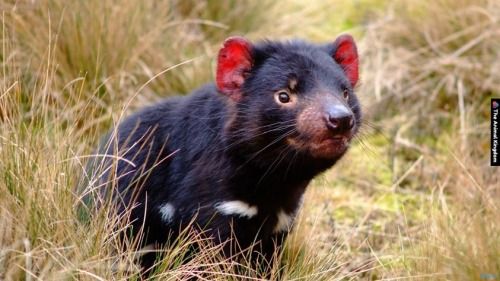

According to Australian researchers, milk from Tasmanian devils could offer up a useful weapon against antibiotic-resistant superbugs. The marsupial’s milk contains important peptides that appear to be able to kill hard-to-treat infections, including MRSA. Experts believe devils evolved this cocktail to help their young grow stronger and scientists are looking to make new treatments that mimic the peptides. They have scanned the devil’s genetic code to find and recreate the infection-fighting compounds, called cathelicidins.
The Sydney team recreated the six devil peptides that they found and tested them on 25 types of bacteria and six types of fungi. One of the synthetic peptides – Saha-CATH5 – appeared to be particularly effective at killing the superbug methicillin-resistant Staphylococcus aureus or MRSA. It also appeared to kill another resistant bug, called vancomycin-resistant enterococcus, as well as fungi, called Candida, which are commonly involved in skin infections.